

- Non-emergency rides
- Scheduled
- Planned transport, not 911
- Hands-on help
- Door-through-door
- The driver assists, not just drives
- Medicaid, MA & more
- Covered
- $0 for Medicaid members
- Right vehicle for you
- Sedan→ambulette
- Ambulatory through wheelchair
What exactly is NEMT?
NEMT is a category of medical transportation that exists between two other categories: standard transportation (rideshare, family driving) and emergency transportation (ambulances). NEMT serves people who can't safely drive themselves and can't easily use public transit or rideshare — but who don't need a paramedic en route.
Who uses NEMT?
- Seniors who no longer drive but still have regular medical appointments
- Patients on recurring treatments (dialysis, chemotherapy, radiation, physical therapy)
- Wheelchair users who need accessible transport
- Post-surgery patients heading home
- Hospital discharges going to a SNF, rehab, or home
- Patients with cognitive impairments who need supervision during transport
- People with mobility limitations not severe enough for an ambulance
What vehicles are used?
NEMT covers a few different vehicle types depending on the passenger:
- Ambulatory NEMT: Standard sedan or minivan for passengers who can walk and seat themselves.
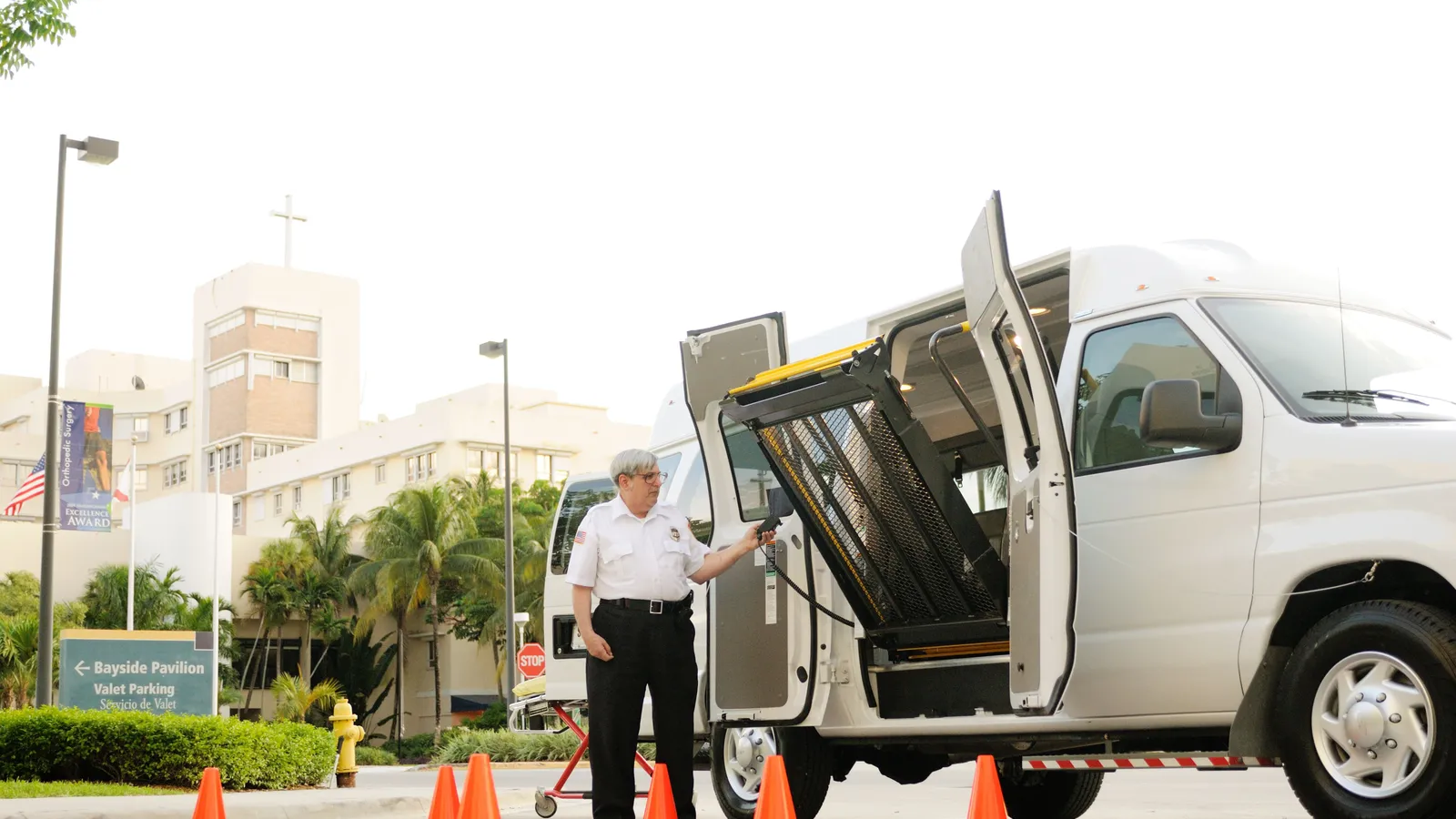
- Wheelchair-accessible vans (ambulettes): Vans with hydraulic lifts or ramps and four-point securement for wheelchair users.
- Stretcher transport: Specialized vehicles for passengers who must lie flat. (DachiPlus refers these to partner stretcher operators.)
How is NEMT different from an ambulance?
The key difference is medical monitoring. An ambulance is staffed by EMTs or paramedics who can administer medications, monitor vitals, and intervene en route. NEMT drivers are trained in passenger assistance, wheelchair securement, and CPR — but they don't deliver medical care. NEMT is appropriate when the passenger is medically stable; ambulances are appropriate for emergencies or transports requiring active monitoring.
Who pays for NEMT?
Several different payment paths cover NEMT in New York:
- Medicaid: Covers NEMT for medically necessary trips at no cost to the member. In New York, Medicaid NEMT is coordinated through MAS (Medical Answering Services).
- Medicare Advantage: Many plans include transportation as a supplemental benefit. See coverage details.
- Workers' compensation: Covers trips related to a work-related injury.
- No-fault auto: Covers trips related to a motor vehicle accident.
- Long-term care insurance: Often covers transportation as a benefit.
- Private pay: Direct payment by credit or debit card.
What "non-emergency" actually rules out
The name describes the trip, not the passenger's condition, and the distinction matters because people who are genuinely unwell sometimes assume NEMT is not meant for them. A dialysis patient, someone mid-course through chemotherapy, and a person discharged after surgery are all seriously ill and all appropriate NEMT passengers. What makes a trip non-emergency is that it is scheduled and that no clinical care is needed on the way. If a passenger requires monitoring, oxygen administered by a clinician, or intervention en route, that is an ambulance journey regardless of how far ahead it was planned.
The corollary is worth stating plainly, because it is a safety point rather than a policy one: NEMT is never the right call for a suspected stroke, chest pain, breathing difficulty or any sudden deterioration. Those are 911 calls. Booking a scheduled vehicle for an emergency wastes the time that matters most, and a driver arriving to find a medical emergency can do very little beyond calling for the ambulance that should have been called first.
Door-to-door, door-through-door, and why the difference matters
NEMT services describe their level of assistance with terms that sound interchangeable and are not. Curb-to-curb means the vehicle collects you at the kerb and you make your own way to and from it. Door-to-door means the driver comes to your door and walks you to the vehicle. Door-through-door goes further again — the driver accompanies you inside the destination building and hands you over at reception rather than leaving you at the entrance.
For a rider who is steady on their feet, the distinction is academic. For someone recovering from surgery, living with dementia, or navigating a large hospital campus alone, it is the difference between a trip that works and one that ends with a confused patient in the wrong lobby. Ask which level a provider actually delivers rather than assuming, since all three are commonly marketed under the same general description of assistance.
How do you book NEMT?
If you have Medicaid, call MAS at 1-844-666-6270 at least 72 hours before your appointment. If you're paying privately or using insurance, call the NEMT provider directly — for DachiPlus, that's (516) 754-7777.