

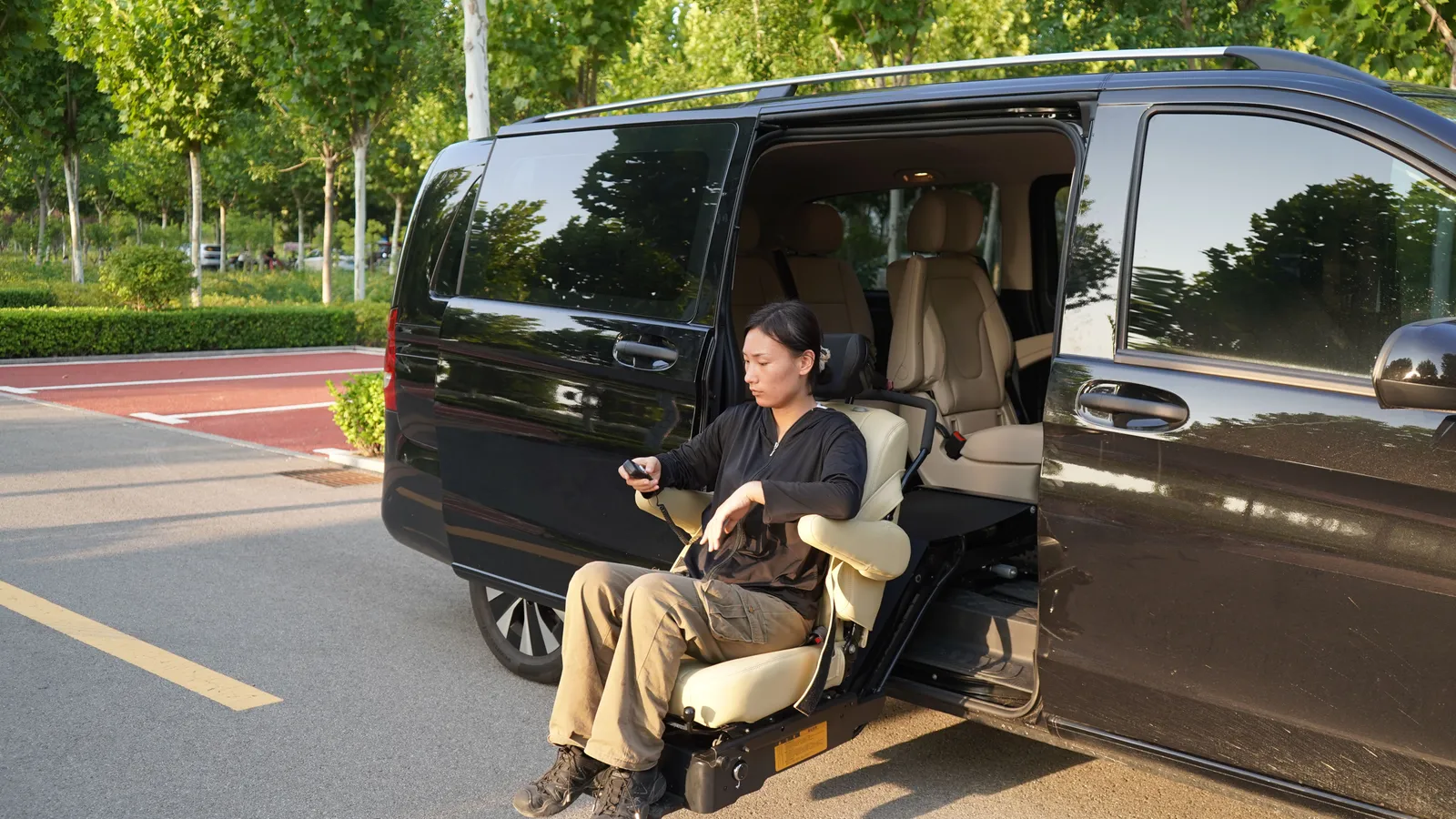
- Board seated
- Ramp / lift
- No transfer out of your chair
- Locked in safely
- Securements
- Four-point tie-downs
- Hands-on help
- Door-through-door
- From your door to the exam room
- Service area
- Nassau & Suffolk
- Plus NYC specialty trips
What is a wheelchair-accessible taxi?
A wheelchair-accessible taxi is a vehicle fitted with a ramp or hydraulic lift and floor anchors so a passenger can board and travel without transferring out of their wheelchair. A standard sedan or a regular rideshare cannot do this safely. Manual and most power wheelchairs are secured with four-point tie-downs, and the passenger wears a lap and shoulder belt for the ride. You may also see it called a mobility taxi.
Wheelchair taxi vs. non-emergency medical transportation
People search for a "wheelchair taxi" or "handicap cab," but for a medical trip what you usually want is non-emergency medical transportation (NEMT). For the step-by-step of arranging one, see our guide to how to get a wheelchair-accessible ride. The vehicle is similar, but NEMT adds what a taxi does not:
- Trained drivers who help you from your door to the vehicle and into the medical office, not just curb-to-curb.
- Insurance billing. A wheelchair taxi is out of pocket. NEMT can be covered by Medicaid, Medicare Advantage, no-fault auto, and workers' compensation.
- Reliability standards. Medical rides are scheduled and accountable, which matters for dialysis and treatment you cannot miss.
If your trip is purely personal (not medical), a private-pay wheelchair-accessible ride still works. If it is medical, NEMT is almost always the better and cheaper route.
How much does a wheelchair-accessible ride cost on Long Island?
If you have Medicaid and the trip is to a covered medical service, the ride is free when booked through MAS. Medicare Advantage plans often include a set number of trips per year. Without coverage, wheelchair-accessible transportation is private pay, priced by distance and trip type. For an exact quote across Nassau or Suffolk County, call DachiPlus at (516) 754-7777. See our wheelchair transport cost guide for the full breakdown.
Ramp or lift, and why it changes what you can book
Accessible vehicles load in one of two ways, and the difference is not cosmetic. A ramp is a fold-out or in-floor slope the chair is pushed up, usually into a lowered-floor minivan; it is quick, quiet and works well for manual chairs and lighter power chairs. A lift is a powered platform that raises the chair into a high-roof van, and it is what heavier power chairs and scooters generally need. Lifts have a rated capacity covering chair and occupant together, so the combined weight is a real constraint rather than a formality — a heavy power chair plus rider can approach the limit of a platform that would carry a manual chair and rider without difficulty.
Chair dimensions matter for the same reason. Width decides whether the chair clears the door aperture, and height matters more than people expect in a lowered-floor van, particularly for riders in a tilt-in-space or high-backed chair. None of this is a problem when dispatch knows in advance; all of it becomes one when a vehicle arrives that physically cannot take the chair. Say the chair type — manual, power, scooter — and mention if it is unusually large or heavy when you book.
The step nobody plans for: getting out of the building
An accessible vehicle solves the vehicle. It does not solve the front steps. This is the most common reason an otherwise correct booking fails on the day, and it is worth checking before you book rather than discovering it with a driver waiting outside. If the pickup address has steps with no ramp, a narrow interior hallway, or a lift that is out of service in an apartment building, the chair may not be able to reach the kerb at all.
Drivers assist with boarding and securement — that is the difference between this and an ordinary taxi — but they are not permitted to carry a rider or a chair down a flight of stairs, which is unsafe for everyone involved. Where a building genuinely cannot be exited in the chair, the usual answer is a transfer-to-seat arrangement with assistance to the vehicle, or a different exit. Either way, flag it at booking so the right vehicle and the right amount of time are allocated.
How do I book wheelchair-accessible transportation?
Medicaid members: call MAS at 1-844-666-6270 at least 72 hours ahead, state that you need a wheelchair-accessible vehicle, and request DachiPlus by name. Our MAS guide walks through every step.
Private pay, Medicare Advantage, or insurance: call DachiPlus directly at (516) 754-7777. Tell us your wheelchair type (manual, power, or scooter) so we send the right vehicle. Same-day wheelchair rides are available for private pay when we have a vehicle open.